"I have never welcomed the weakening of family ties by politics or pressure" - Nelson Mandela.
"He who travels for love finds a thousand miles no longer than one" - Japanese proverb.
"Everyone has the right to respect for his private and family life, his home and his correspondence." - Article 8 of the European Convention on Human Rights.
"When people's love is divided by law, it is the law that needs to change". -
David Cameron.

Showing posts with label David Cameron. Show all posts

Friday, 6 December 2013

Britain fails to renegotiate EU free movement rules

Home Secretary Theresa May’s proposals to place greater restrictions on free movement in the EU were dismissed by the European Commission on Thursday.

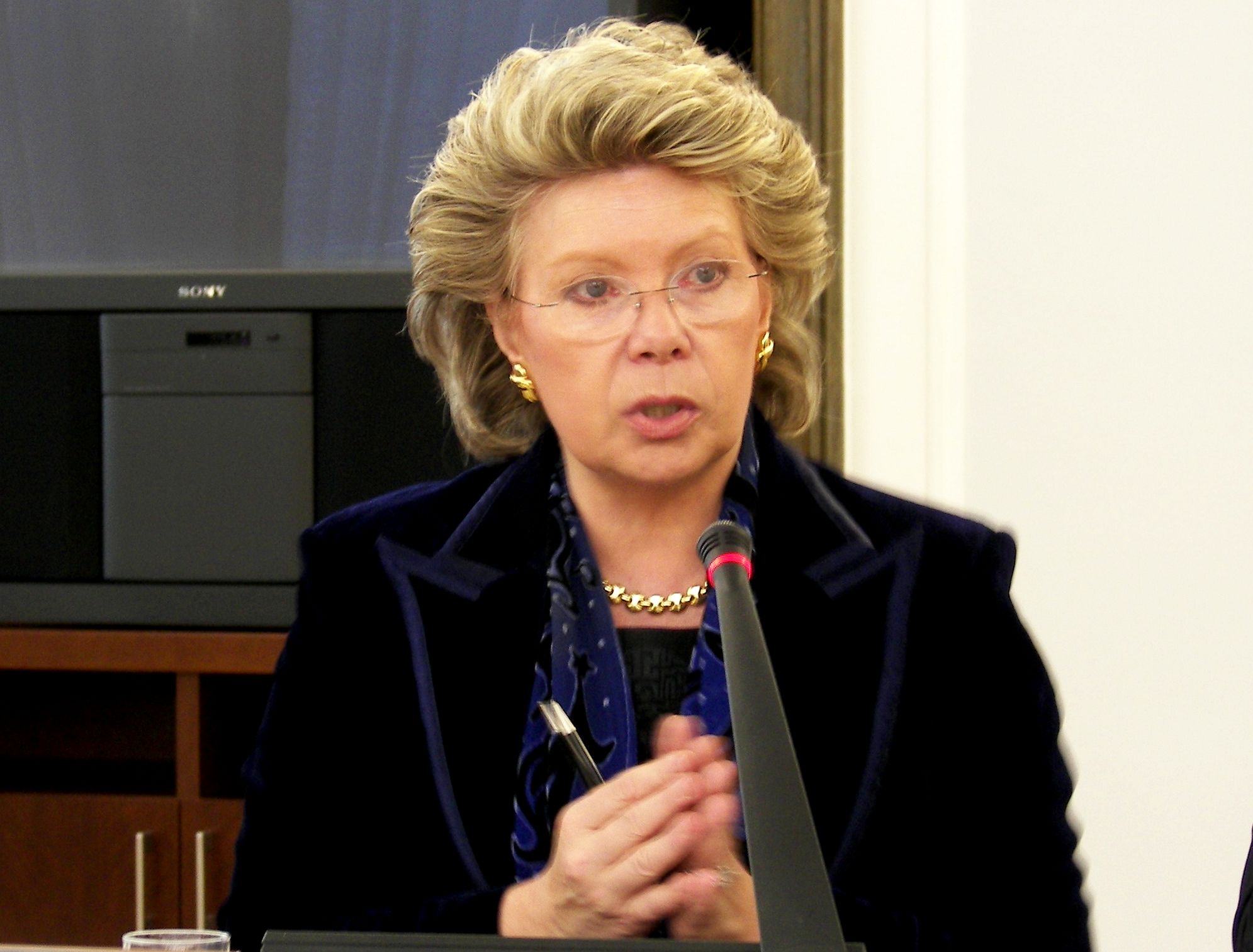
At the Brussels meeting of EU ministers, EU Justice Commissioner Viviane Reding attacked the UK’s welfare system, saying it was “too generous” and “any abuse of benefits by EU migrants is the fault of the British authorities.”

EU Justice Commissioner Viviane Reding attacked the UK’s welfare system
Last week May suggested a cap on numbers if immigration crosses a certain threshold and proposed new member states reach a certain level of economic output or income per head before full free movement rights are permitted.

“We must be able to slow full access to each other’s labour markets until we can be sure it will not lead to mass migration,” said May.

The Netherlands, Germany and Italy have shown some support for free movement reform.

The meeting follows the announcement by Prime Minister David Cameron of plans to limit EU nationals’ access to benefits in the UK, a move which may turn out to be unlawful under EU law.

Among the limitations on the availability of benefits to EU migrants proposed by Cameron are no unemployment benefits for the first three months, no housing benefits on arrival and no benefits after six months.

Reding said the changes will be monitored in Brussels and challenged legally should they break European law.

“Our EU rules are good and they are here to stay. Member states need to apply them to tackle abuse,” said Reding.

The European Commission is expected to release a report on free movement abuse during the two-day meeting which is scheduled to end today.

The proposals come ahead of the removal of labour market restrictions on Bulgarian and Romanian workers in the UK in January 2014.

The latest figures from the Office for National Statistics reveal the biggest rise in immigration in the year preceding June 2013 was migrants from EU nations. 

October saw the publication of a European Commission report which claims less than 38,000 EU migrants claimed Jobseeker's Allowance in the UK in 2012 and unemployed migrants made up just 1.2 per cent of the total population.

Free movement is a fundamental principal of the EU and one which is closely tied to trade and economic integration. Eurostat data says there were 2.3 million EU citizens in the UK and 2.2 million UK citizens in other EU countries in 2012.


Monday, 2 December 2013

Strong economy responsible for rise in net migration

Home Secretary, Theresa May, says the rise in net migration in the year preceding June 2013 was the result of the strength of the UK economy.

Although immigration to the UK fell, fewer people left, resulting in an unexpected increase in net migration despite government pledges to reduce it to below 100,000 by the next election.

The latest figures from the Office for National Statistics reveal net migration rose to 182,000 in the year to June 2013, an increase of 15,000 from the previous year.

Although immigration to the UK fell by 14,000 compared with the previous year, 29,000 fewer people left the UK than in the previous year, bringing emigration levels to their lowest since 2001.

Theresa May attributed the reduction in emigration to Britain’s economic growth, which surpassed that of southern European countries such as Spain, Portugal and Italy. Migrants from these nations made up the biggest rise in immigration.

In contrast, migrants from outside the EU made up the most significant drop in immigration, by around 40,000 from the previous year.

The rise in net migration follows the government’s promise to reduce it to the “tens of thousands” by the end of this parliament.

Following the release of the figures, the home secretary put forward tactics to “regain control” of immigration in an exclusive piece for Politics Home.

In outlining government strategy to achieve this, Theresa May revealed plans to address the pull factors for immigration and to renegotiate the terms of free movement, while she suggested new member states reach a certain level of economic output per head or income before full free movement is permitted.

However, she remarked that an “overwhelming incentive” for migrants to move from poorer to richer countries would remain as long as there is disparity between the earnings of EU states. 

Furthermore, David Cameron announced measures to limit EU migrants’ access to benefits. The welfare restrictions will prevent new migrants from getting job-seekers’ benefits for their first three months in the UK and see benefits terminated after a period of six months unless the migrant has a genuine chance of getting a job. 

“Theresa May has boasted repeatedly that net migration was falling and her target would be met. Now those hollow claims have been completely exposed," said Labour MP David Hanson, shadow immigration minister in speaking of the rise.

Net migration is the difference between the number of people immigrating to the UK and those emigrating. The government has little control over EU migration and emigration from the UK.